CV templates
CV templates for international applications
What a CV means outside the United States
The same person applying for the same job in two countries sends two noticeably different documents. The career is identical; the conventions are not. Four things change: how long it runs, what paper it is laid out for, which personal details belong in the header, and whether a photograph appears at all.
Two pages is normal, and one page is not always better
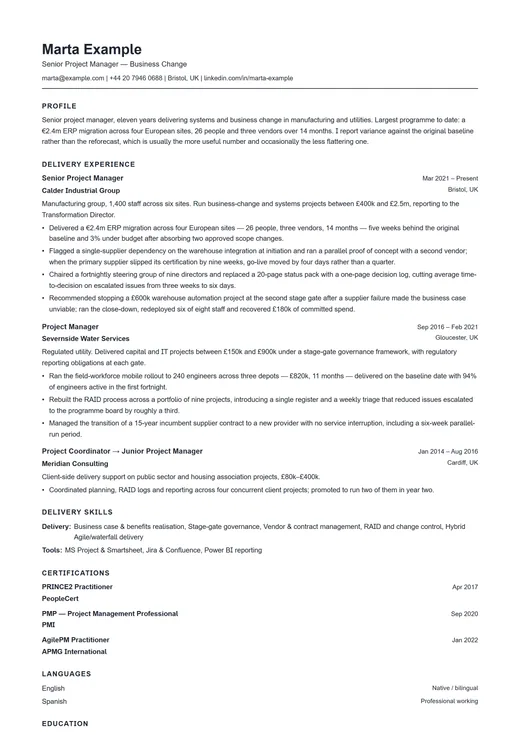
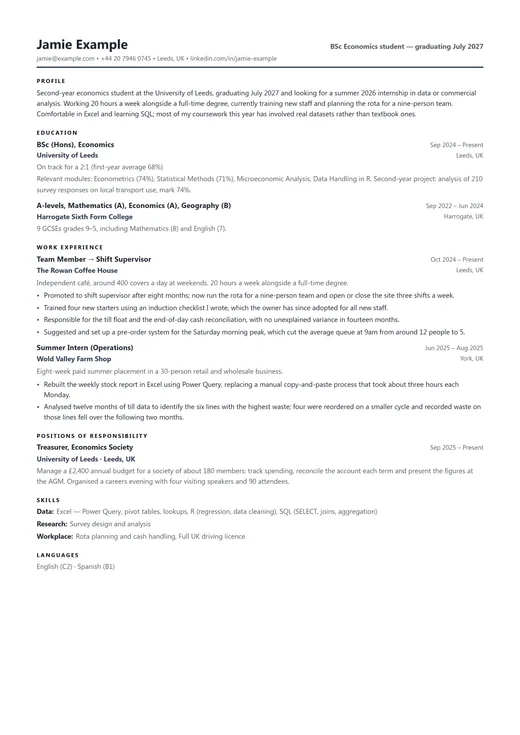
A two-page CV is unremarkable in the UK, Ireland, Germany, France, the Netherlands and most of the EU. The convention is roughly this: page one carries your summary, your current role and the one or two before it; page two carries earlier roles in less detail, education, certifications and languages. Compressing fifteen years of work into one page is not a sign of discipline in these markets — it usually reads as a document that has had its evidence removed. Students and recent graduates are the exception and should stay on one page. Academic CVs are a separate genre altogether and can run to many pages once publications, grants, supervision and conference talks are listed.
A4 is the default almost everywhere
A4 measures 210 × 297 mm; US Letter measures 8.5 × 11 in, or 215.9 × 279.4 mm. A4 is about 6 mm narrower and 18 mm taller. That sounds trivial and is not: a layout built for Letter and printed on A4 leaves a wide band of empty paper at the foot of every page, and a layout built for A4 printed on Letter either scales the type down or pushes your last two lines onto a page of their own. Set the paper size before you start writing, because the line breaks you tune at the end depend on it.
The header is where the regional differences live
Every CV in every market opens with the same core: your name, one phone number with a country code, one professional email address, and the city and country you are in. A full street address is no longer expected and hands over more than it needs to. A LinkedIn URL earns its line if the profile is current; a personal site earns its line if there is work on it. Beyond that core, the extras — date of birth, nationality, marital status, a driving licence, a photograph — are regional, and adding them where they are not expected makes a CV look imported.
Say something about your right to work
If you are applying across a border, one short line saves the recruiter a guess and saves you a rejection based on one. Something as plain as EU citizen, no work permit required or UK Skilled Worker visa held to 2027 belongs near your contact details. Recruiters who cannot tell whether you are employable in their country frequently assume you are not.
Country conventions at a glance
| Country or region | Typical length | Photo | Personal details | Paper |
|---|---|---|---|---|
| United Kingdom & Ireland | Two pages is the working norm; one page for students and graduates. | Not expected. Leave it off. | Contact details only. No age, date of birth, nationality or marital status. A city is enough — no street address. | A4 |
| France | One page early in a career, two once you have a decade behind you. | Common but entirely optional, and less universal than it once was. | Some candidates still list age and a driving licence. A compétences block and language levels carry real weight. | A4 |
| Germany, Austria & Switzerland | Two pages for the Lebenslauf itself, often sent with a cover letter and scanned certificates. | Still widely included, though it cannot be required of you and some large employers now ask you to omit it. | Date and place of birth are still common. Some candidates date and sign the final page; nobody will reject you for skipping that. | A4 |
| Netherlands & Nordics | One to two pages, written tightly. Padding is noticed. | Optional and increasingly left off. | Date of birth appears sometimes. Nationality or work-permit status is useful if you are applying from outside the EU. | A4 |
| Morocco & the wider MENA region | One to two pages. | Usually included. | Date of birth, nationality and a driving licence are commonly listed. A languages section — Arabic, French, English — is often the first thing read. | A4 |
| United States & Canada | One page under roughly ten years of experience, two beyond it. Called a résumé, not a CV. | No. | Contact details only. No photo, no date of birth, no marital status, no nationality. | US Letter |
Conventions vary by employer, sector and even by office. A multinational hiring in Paris may screen exactly the way its London team does, a Berlin start-up may want the same stripped-back document a San Francisco one would, and public-sector employers everywhere tend to be more formal than private ones. Where a posting or an application form states what it wants — a length limit, a file format, whether to attach a photograph — follow the posting rather than the convention.
Photo or no photo
Where a photo is normal
Germany, Austria and Switzerland; much of southern and eastern Europe; Morocco and the wider MENA region; and parts of Asia and Latin America. If you include one, treat it as part of the document rather than a snapshot: head and shoulders, plain background, even lighting, and the clothes you would wear to the interview. Use the same image on your LinkedIn profile so the two match. A cropped holiday photograph does more damage than no photograph at all.
Where to leave it off
The UK, Ireland, the United States, Canada and Australia. Employers in these markets often ask candidates not to send one, and it is widely reported that some recruitment teams remove photographs before a hiring manager sees a file so that shortlisting cannot be influenced by them. Including one anyway does not usually get you rejected, but it does signal that the CV was written for somewhere else.
22 templates with a photo block
These layouts reserve space for a portrait in the header or the sidebar. The remaining 39 are designed without one, so nothing collapses awkwardly when there is no image to place.
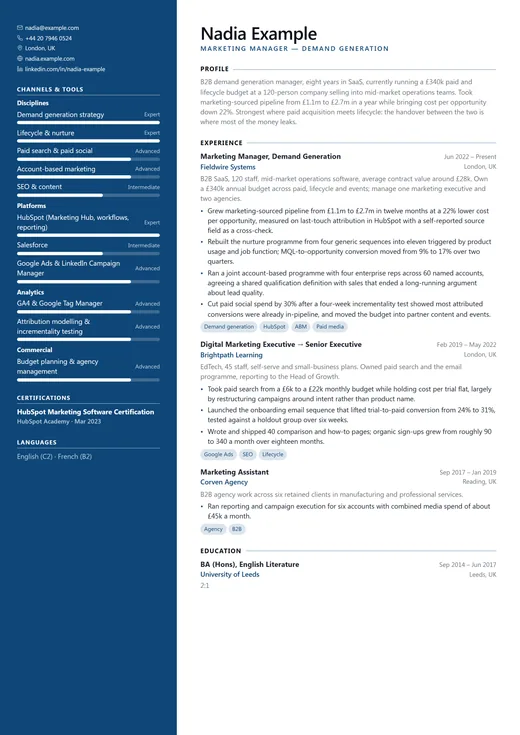
Coloured Sidebar
modern · two columns
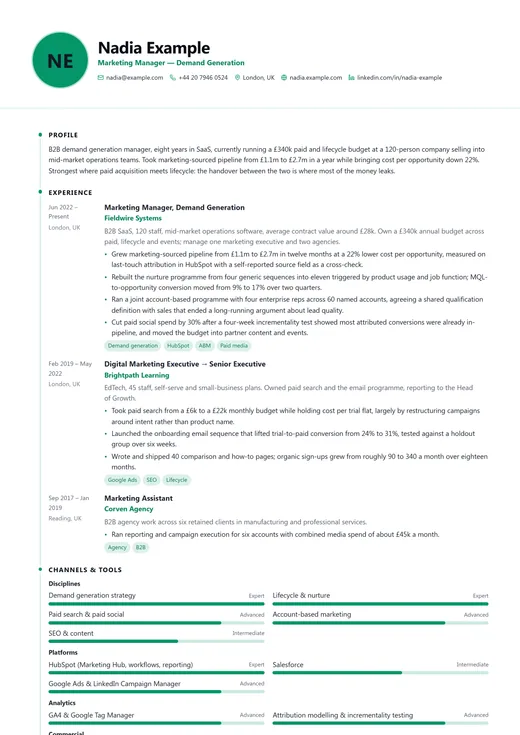
Modern Clean
modern · one column
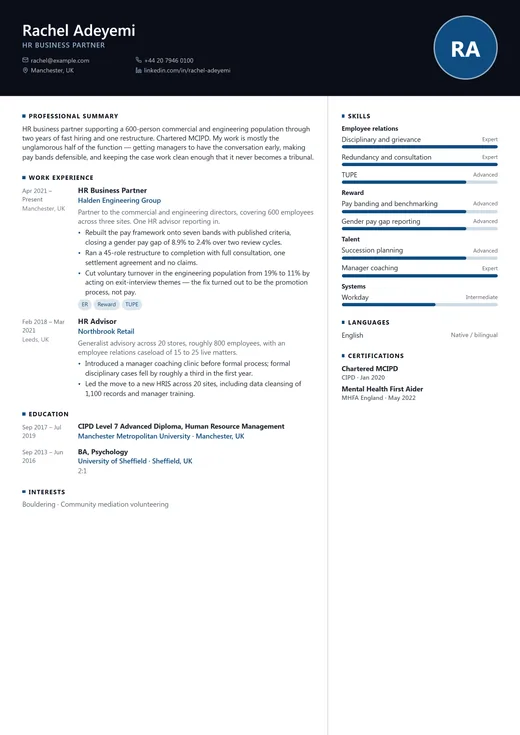
Modern Corporate
modern · two columns
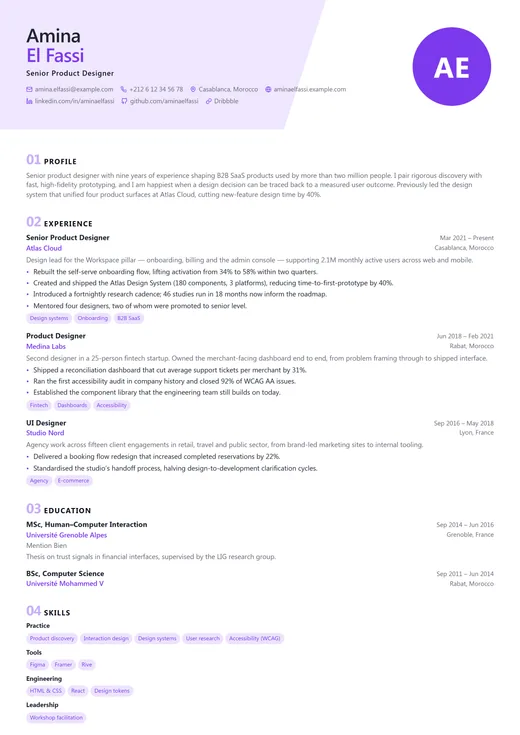
Modern Creative
modern · one column

Modern Elegant
modern · one column
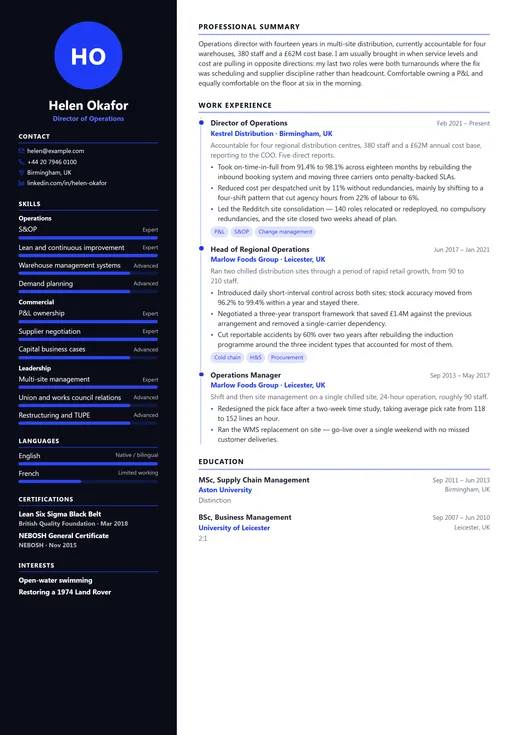
Modern Executive
modern · two columns

Modern Professional
modern · one column
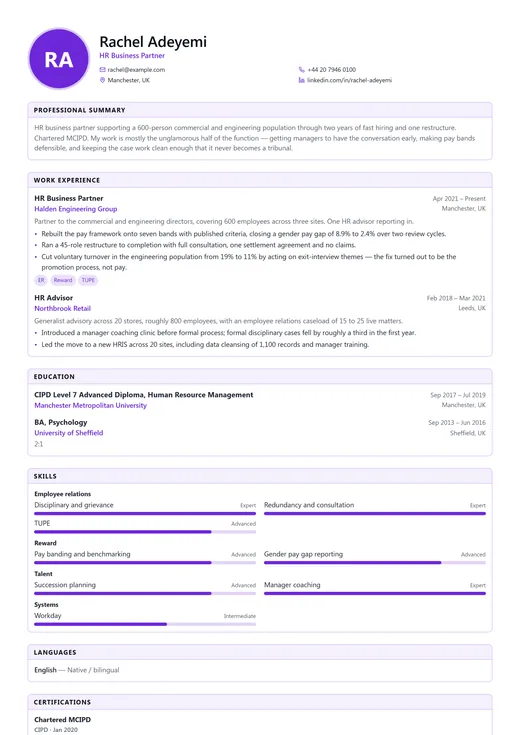
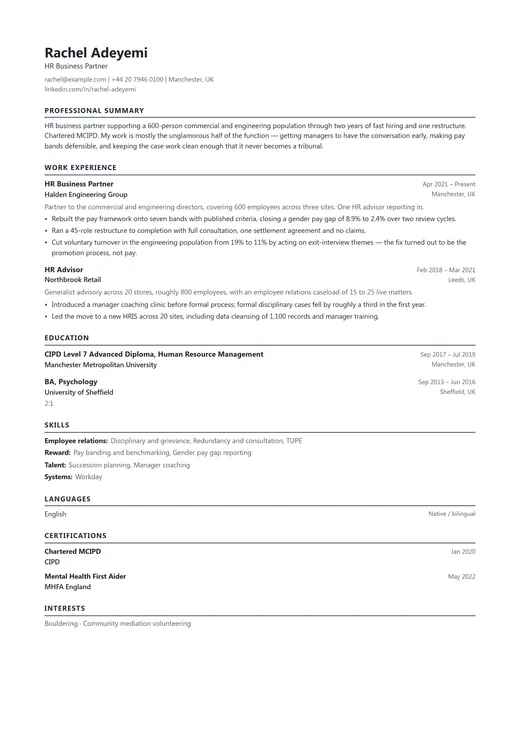
Human Resources CV
corporate · one column
Browse CV templates by category
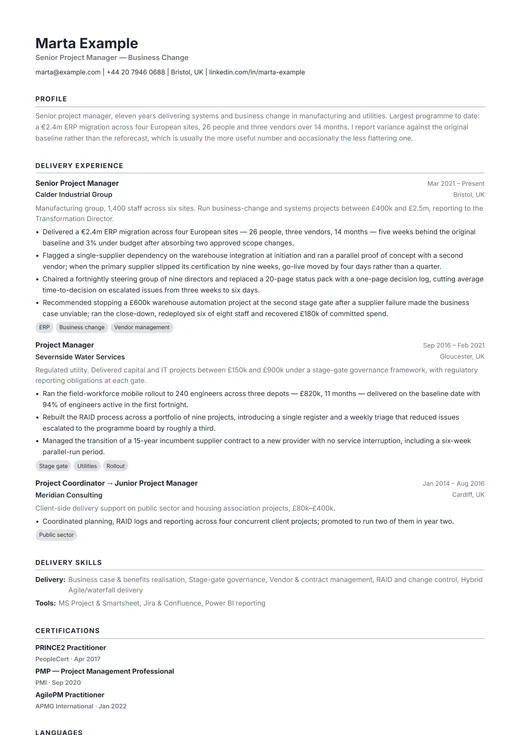
Modern CV templates11 designs
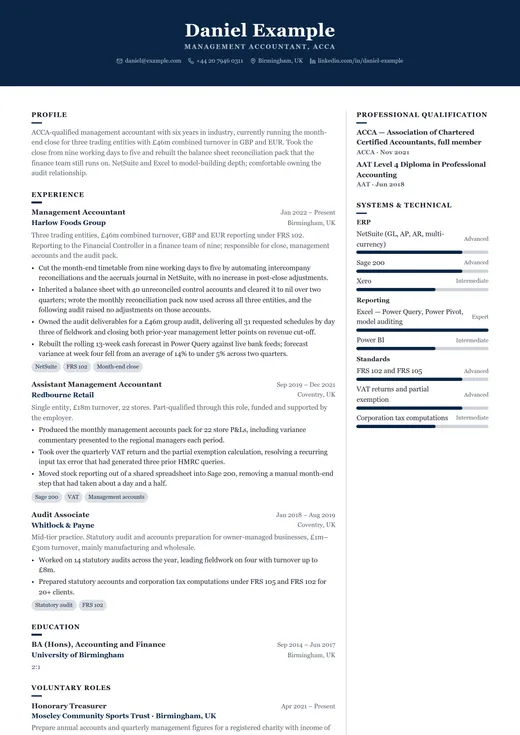
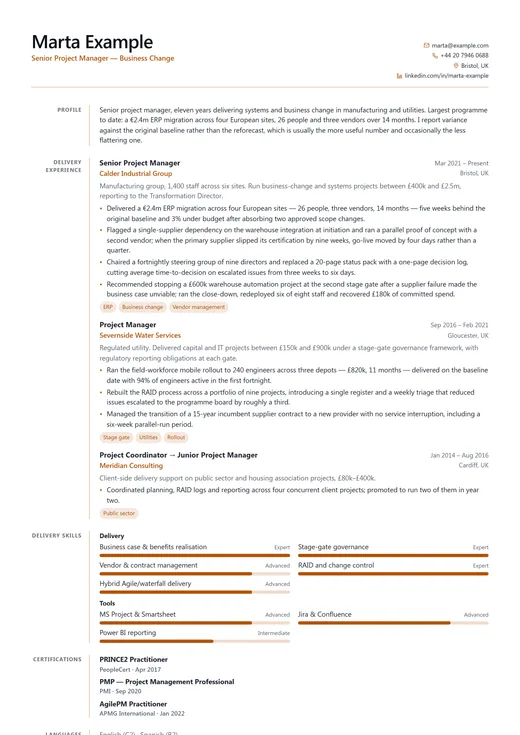
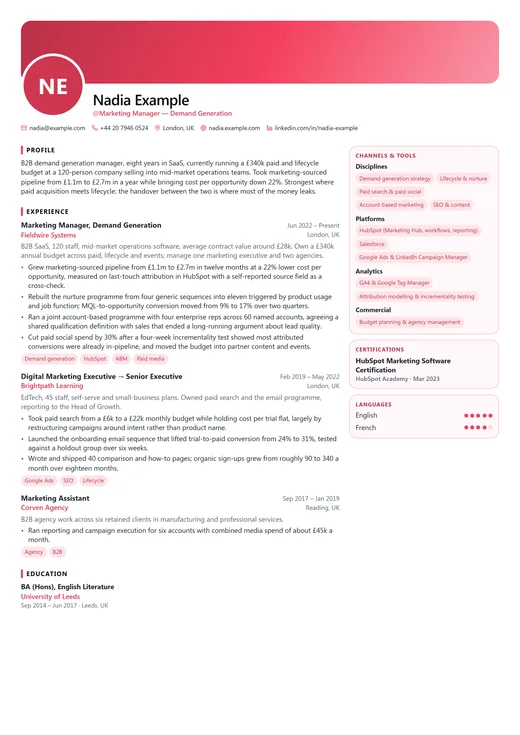
Contemporary layouts with generous whitespace and a single accent colour. The safest place to start if you are not sure what your industry expects.
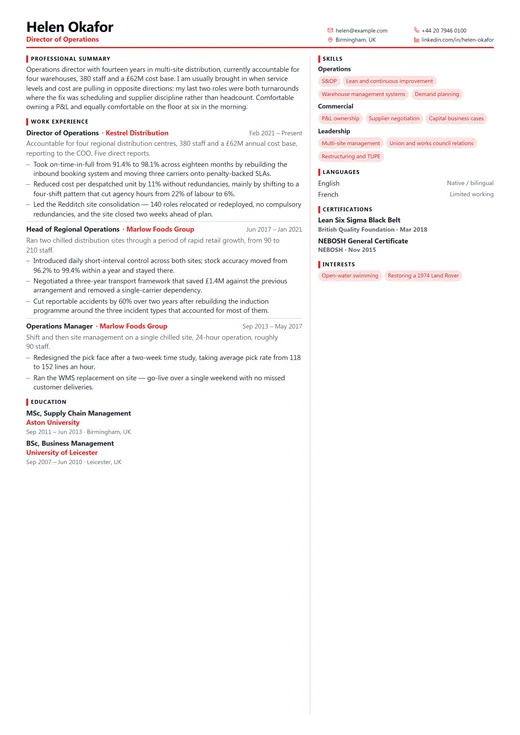
Corporate CV templates11 designs
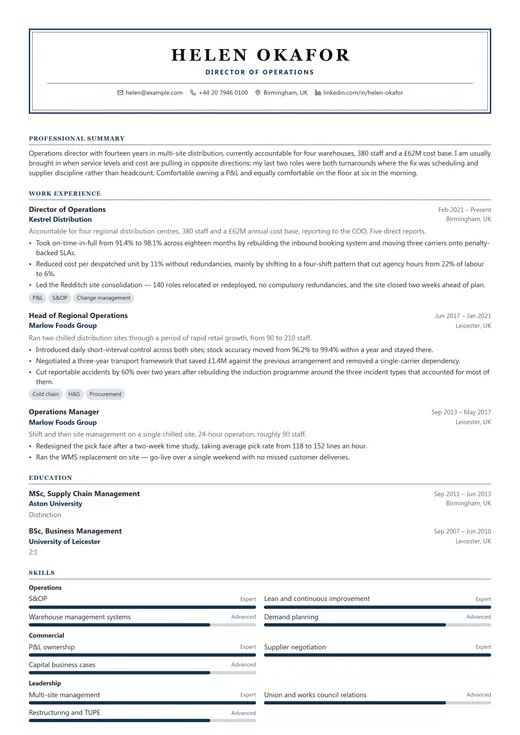
Structured, restrained designs built for finance, consulting, management and other environments where a CV is judged on rigour before personality.


Creative CV templates11 designs
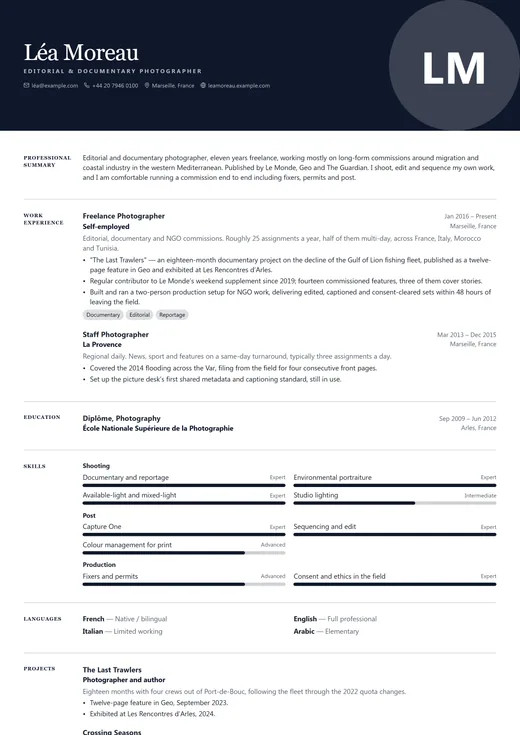
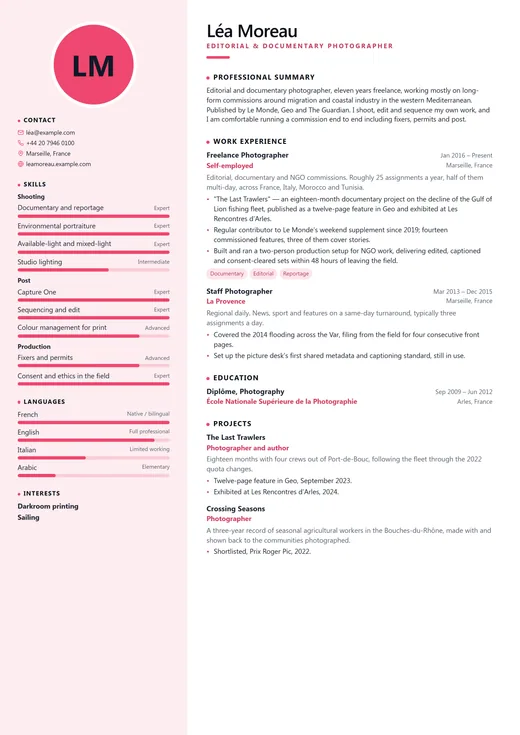
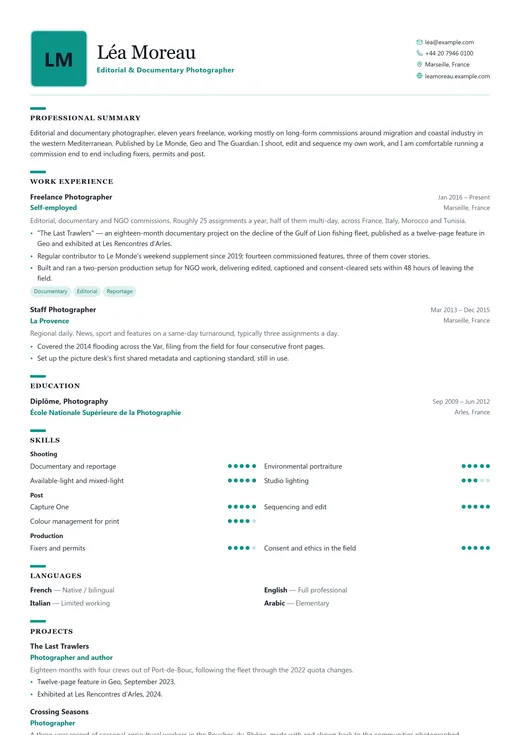
Expressive layouts for design, art direction, photography and content roles — where the document itself is a work sample.
Technology CV templates10 designs
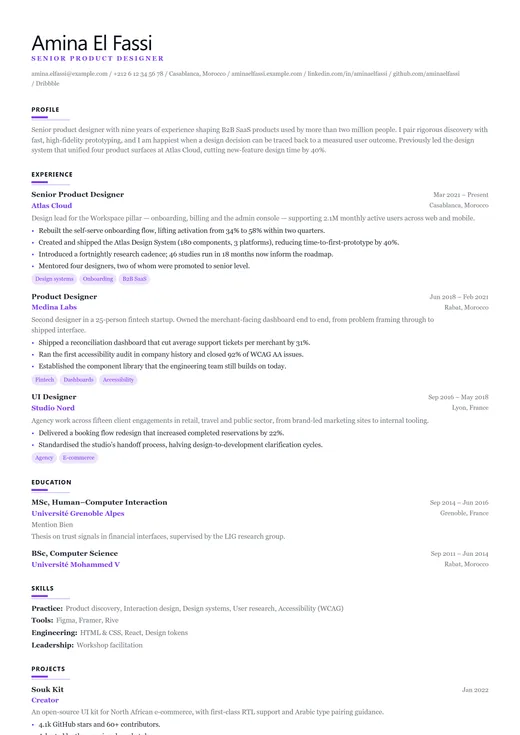
Engineering-oriented templates with room for a stack, projects and open-source work, without turning your CV into a keyword dump.
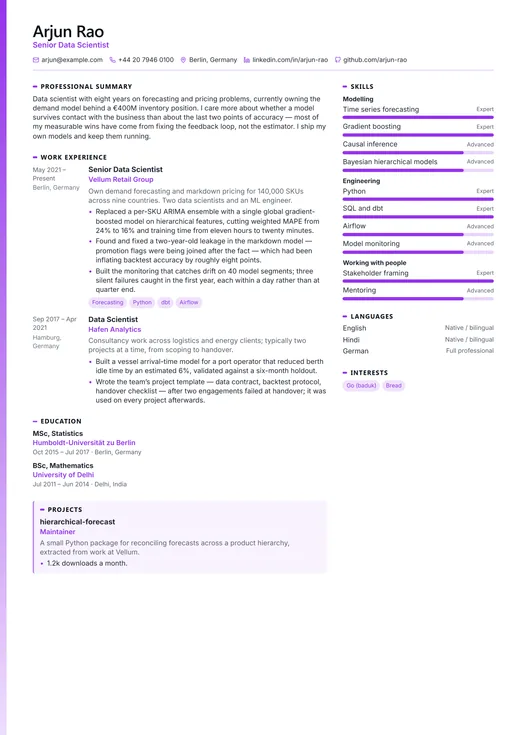
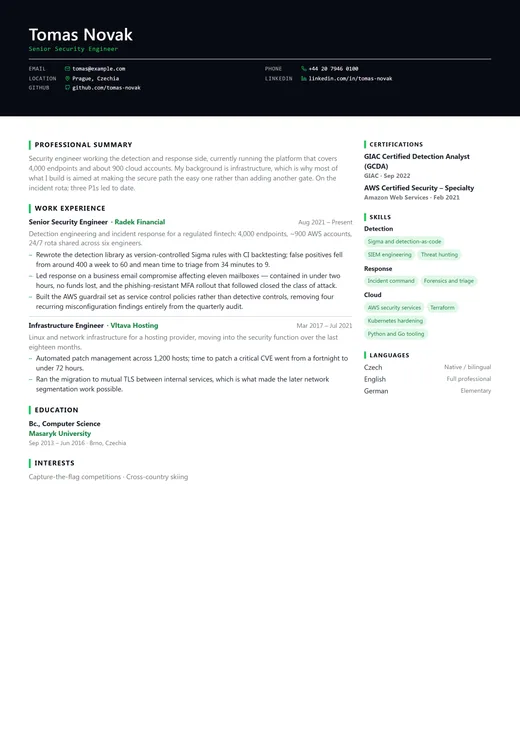

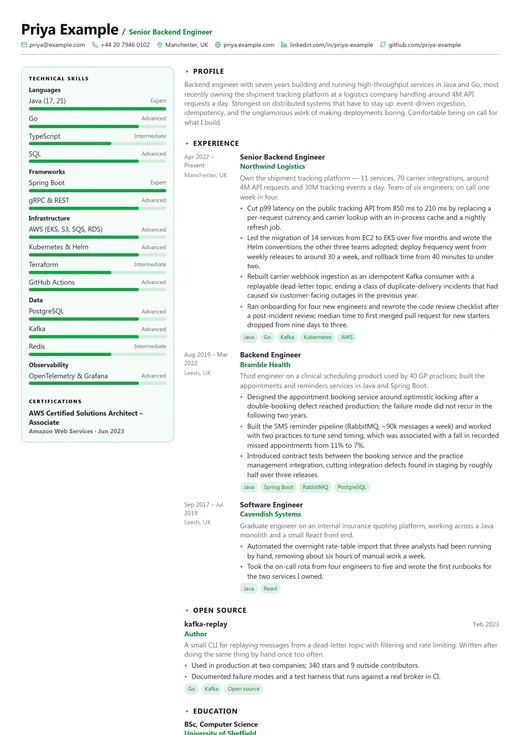
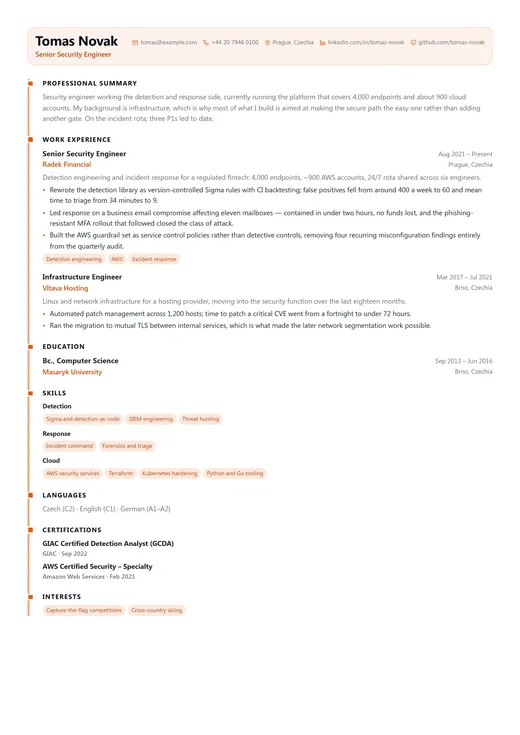
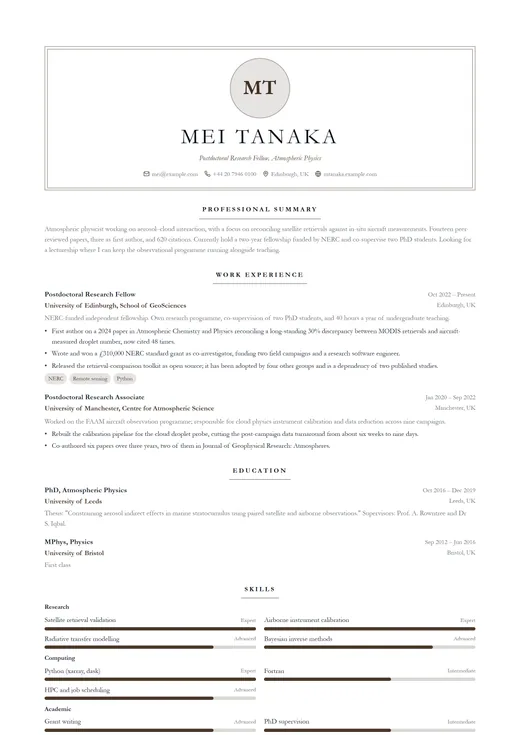
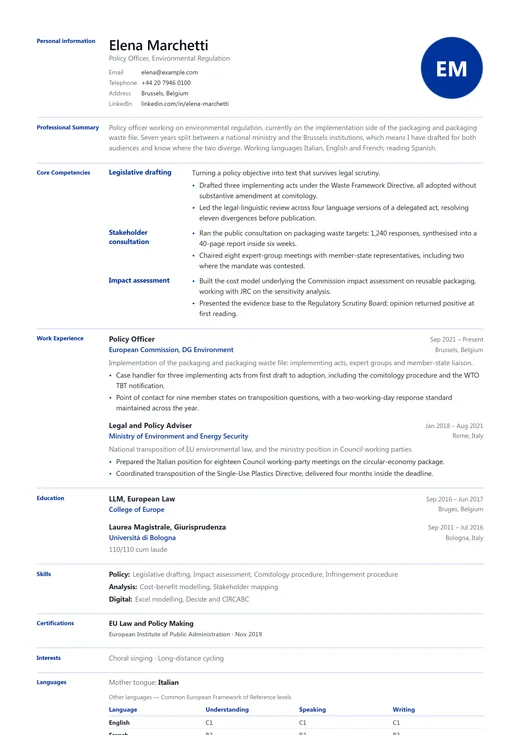
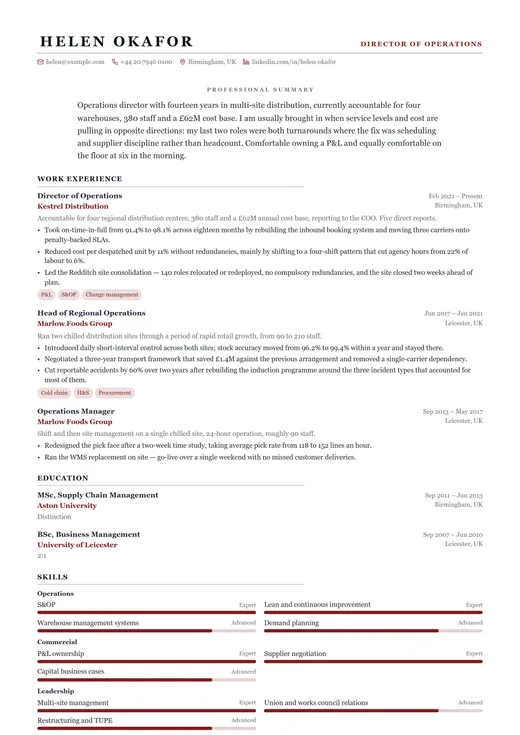
Classic CV templates12 designs
Traditional, serif-friendly formats for academia, law, government and any employer that still expects a conventional document.


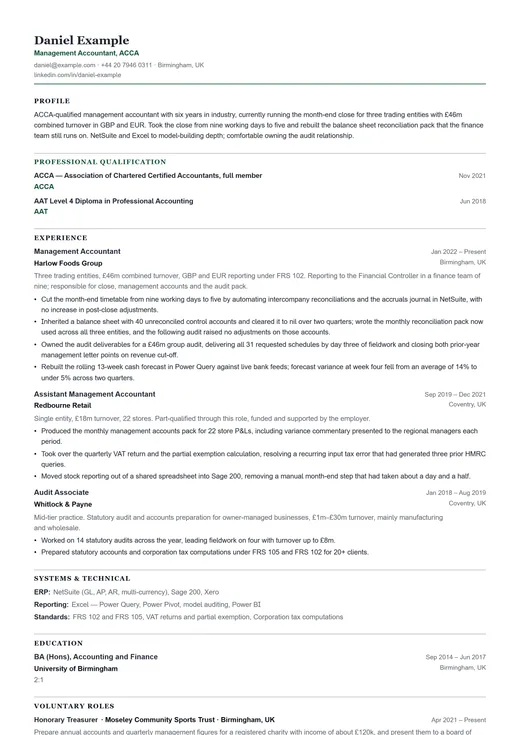
ATS-friendly CV templates6 designs
Stripped-back, single-column layouts engineered to be parsed correctly by applicant tracking systems. No columns, no graphics, no surprises.

Frequently asked questions
Write it once, export it for any market
Keep one master CV and switch the paper size, the photo block and the template whenever you apply somewhere new. Nothing is retyped.
Free plan includes the full editor and PDF download.
Keep reading
- All templatesThe full gallery of 61 designs, previewed at full page size.
- Resume templatesThe US version: one page, Letter paper, no photo.
- ATS CV templatesHow applicant tracking systems read a file, and what breaks them.
- CV examples by roleWorked rewrites for ten roles and career stages.
- What makes a CV professionalStructure, tone and the details recruiters notice.
- Online CV builderThe editor, live preview and PDF export explained.